






Office Address:
Willow Court, West Way, Minns
Business Park. Oxford OX2 0JB
+44 (0) 1865 244011
hello@smithinst.co.uk





Quality Policy | IT Security | Health and Safety Policy | Environment Policy | Business Continuity | Privacy Policy | This website uses cookies | Terms of Use
© Smith Institute 2026. All rights reserved. Website by Studio Global
Smith Institute Ltd is a company limited by guarantee registered in England & Wales number 03341743 with registered address at 1 Minster Court, Tuscam Way, Camberley, GU15 3YY
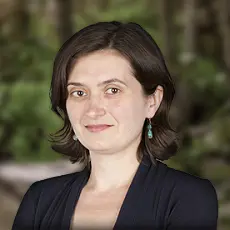
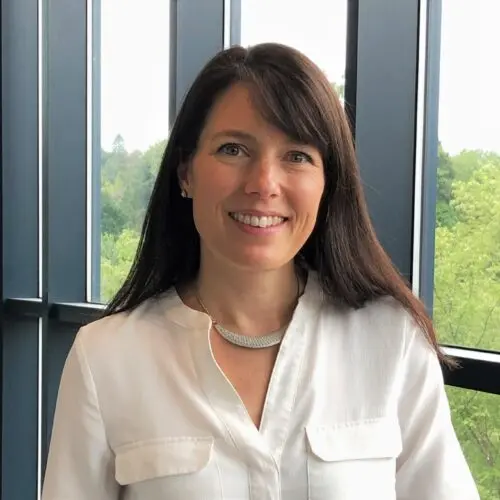
Dr Ruth Voisey joined the Smith Institute in November 2021. She was appointed Chief Executive Officer in 2023 and sits on the Board of Directors. Prior to her current role, Ruth was Technical Director and Head of Innovation Strategy from 2021-2023. This has positioned her perfectly to realise her clear vision and deep understanding of where we need to take our services to meet the needs of the future.
Before joining Smith Institute, Ruth spent seven years in Research at Dyson. She led global multidisciplinary teams, in acoustics and machine learning, to explore new markets and guide technologies from low to high technology readiness level for maximum impact.
Ruth has a PhD in Applied Mathematics from the University of Manchester. Ruth is a Fellow of the Institute of Mathematics and its Applications and sits on their Professional Affairs Committee.
Music and festivals have always played a big part in her life. She used to work in festival production, but now just gets to enjoy them. Glastonbury is a firm favourite.
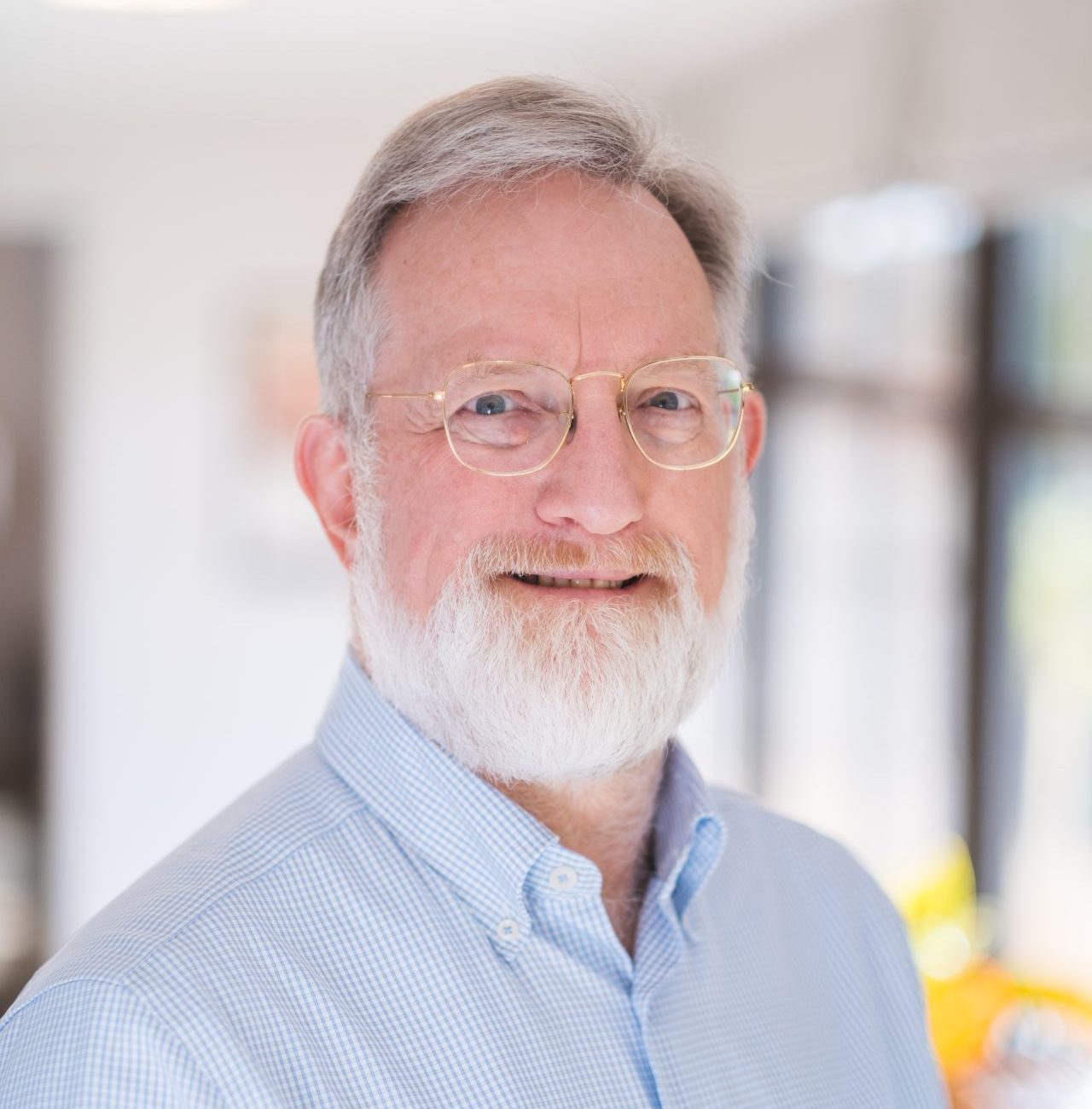
Dr Robert Leese was appointed as Chief Technical Officer in May 2017, and was previously Chief Executive of the Smith Institute and a member of its Board of Directors since 1999.
He previously held Research Fellowships at the Universities of Oxford and Cambridge, and a visiting position at Brown University.
Robert holds a PhD in mathematical physics from the University of Durham and has been a Fellow of St Catherine’s College, Oxford, since 1993. He is also a Fellow of the Institute of Mathematics and its Applications and a member of the Peer Review College of the Engineering and Physical Sciences Research Council.
Robert and and colleagues have published a paper on the use of mathematical optimisation tools in spectrum management to quantitatively evaluate the consequences of spectrum policies through scenario analysis.
Rachel Dalton joined Smith Institute in January 2021 as CFO. Rachel qualified as a Chartered Accountant with Deloitte & Touche in 2000. She has spent her career working in both the not-for-profit and commercial sectors. Rachel holds a BSc in Mathematics & Psychology from Royal Holloway, University of London and an MSc in Development Finance from the University of Reading. In her spare time Rachel enjoys running and travelling.
Dr Heather Tewkesbury joined the Smith Institute in 2001, she was appointed Chief of Strategic Relationships in 2023. Prior to her current role, Heather was Chief Executive Officer from 2017-2023 and Business Development Director from 2006-2017.
Heather is currently President of the Institute of Mathematics and its Applications, leading engagement in the mathematical sciences with business and government.
Before joining the Smith Institute, Heather worked as a Modelling Development Manager for Cadbury Trebor Bassett, applying mathematics across all areas of the business.
Heather holds a PhD in modelling heat transfer from the University of Birmingham. She is a Chartered Mathematician, Fellow of the Institute of Mathematics and its Applications, sits on the advisory board for NAMS (National Academy for Mathematical Sciences) and was an impact assessor for the 2014 and 2021 Research Excellence Framework.
Her interests outside of work include playing violin and viola (but not at the same time), cold water swimming and kayaking.
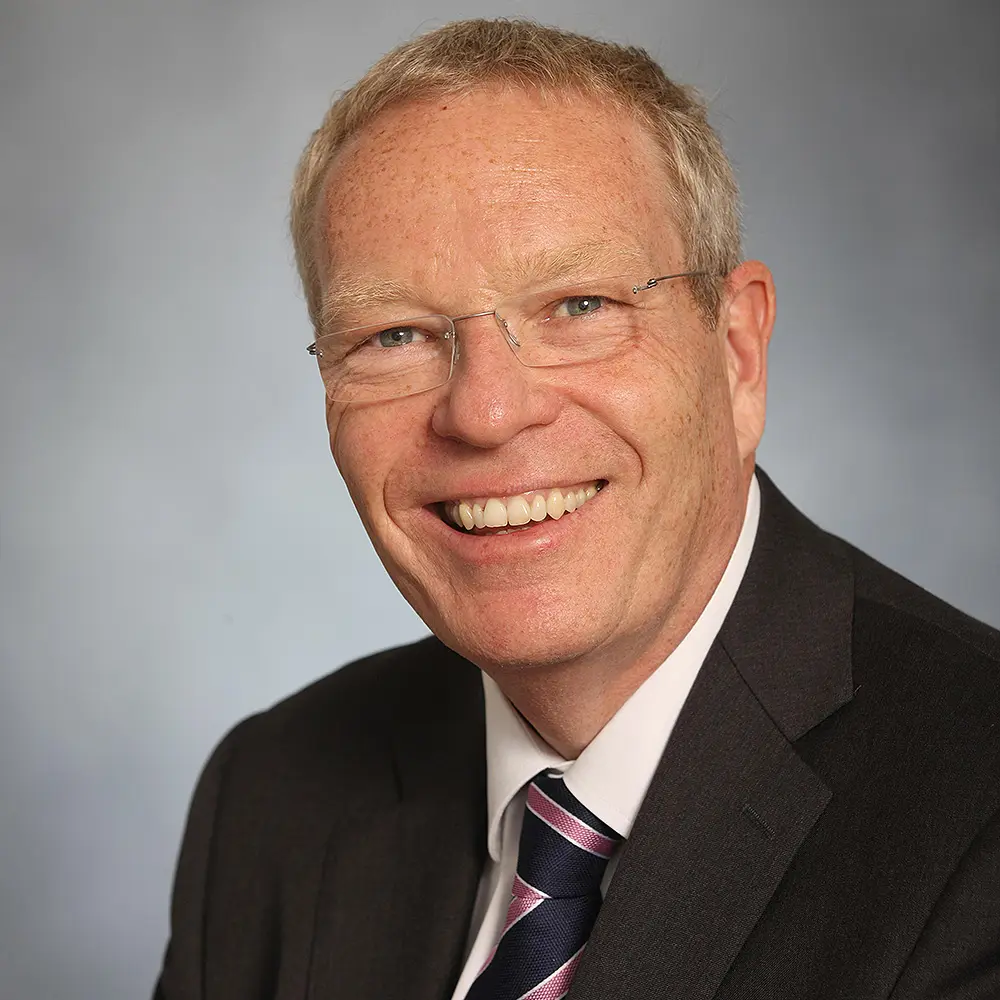
Dr Tim Boxer joined the Smith Institute in 2002.
Previously, he worked for ArjoWiggins as a Diagnostic Engineer, where he worked on time series and signal analysis, flow through compressible porous media and linear elastic beams.
More recently Tim’s interests have developed into the areas of probabilistic modelling and decision making under uncertainty. Tim holds a PhD in modelling industrial processes from UMIST, and an MSc in Industrial Applied Mathematics from the University of Southampton.
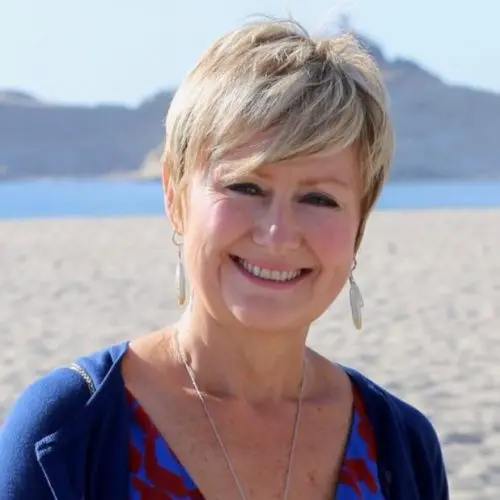
Dr Georgina Lang joined the Smith Institute in February 2016. Previously she worked as a mathematician at a research and development consultancy, applying mathematical modelling techniques to a broad range of engineering and scientific applications.
Georgina holds an MMath and DPhil in mathematics from the University of Oxford, where her research focussed on modelling the mechanical behaviour of biological tissues.
Dr David Allwright joined Smith Institute in 2000.
He holds a PhD in Mathematics from the University of Cambridge and worked as a Research Fellow on control theory at the Universities of Cambridge and Toronto.
David's technical interests then expanded at Topexpress Ltd to include signal processing, acoustics, vibration and other areas of fluid and solid mechanics, and then further, to other wave phenomena and probabilistic and Markov models at the University of Oxford and Smith Institute.
Dr Jakob Blaavand is a leader in data and AI at the global fashion company BESTSELLER in Denmark. Previously, he was the Director of Mathematics at the Smith Institute since 2018. He joined the Smith Institute in 2015 having completed a DPhil in differential and algebraic geometry at the University of Oxford.
Today, his main focus is on creating high-performing AI-product teams that work efficiently with the latest technologies to solve critical business problems, such as demand forecasting, recommender systems and logistics optimisation.
While working at the Smith Institute, his main areas of focus was on forecasting and optimisation, particularly with applications within energy and telecommunications.
Coralia Cartis is Associate Professor of Numerical Optimisation at the Mathematical Institute, University of Oxford.
Her research interests include algorithm design, analysis and implementation of large-scale optimisation problems in a number of applications.
Coralia was previously a member of the Industrial Mathematics Knowledge Transfer Network Scientific Committee.
Prof Alan Champneys is Professor of Applied Non-linear Mathematics and Head of Queens School of Engineering at the University of Bristol.
Alan’s research interests include understanding complicated dynamics (e.g. chaos) in physical systems and their application across engineering to aircraft and structural dynamics, power electronics, fluid-structure interaction, numerical bifurcation algorithms for periodic orbits of large systems and localised phenomena. In 2014 he gave the Alan Tayler Lecture at St Catherine’s College, Oxford.
Richard Craster is Professor of Applied Mathematics at Imperial College. His research interests span across Fluid Mechanics and Elasticity/ Electromagnetism, primarily motivated by Engineering and Physics applications, and is often performed in close collaboration with scientists from those disciplines.
In Fluid mechanics, Richard’s interests are in fluid flows on the microscale concentrating on thin film theories, the effects of surfactants , electrokinetics and coupling between elastic substrates and fluid flow.
In Solid Mechanics and Electromagnetism Richard’s current interests are in wrinkling and buckling of thin elastic plates, fracture mechanics, trapped modes, slow waves in optics and high frequency homogenization theory for microstructured media.
Alison Etheridge DBE is Professor of Probability at the University of Oxford where she holds a joint appointment in the Departments of Mathematics and Statistics and a Fellowship at Magdalen College. She has previously held research fellowships in Oxford and Cambridge and positions in Berkeley, Edinburgh and Queen Mary University of London.
Her interests have ranged from abstract mathematical problems to concrete applications with much of her recent research concerning mathematical models of population genetics.
Rebecca is Associate Vice-President (Interdisciplinary Research) and Professor of Mathematics at the University of Southampton. Her research interests include applications of mathematics to public health, evolutionary biology, and dynamics on social networks.
Most recently she has been working on machine learning of patient burden in multimorbidity, the spreading of health-related information on social networks, and the evolution of transgenerational effects in response to changing environmental conditions. She is also interested in what makes researchers creative and why, and how collaboration and interdisciplinarity lead to new ideas.
She has also performed stand-up comedy inspired by her research.
David Leslie is Professor of Statistical Learning at Lancaster University. He also held a position at the data science startup Secondmind.ai.
David’s principle research interests are in learning and decision-making, and in particular which actions should a decision-maker take in the short term in order to ensure sufficient information is gained for long term performance. He has collaborated with many companies to implement these ideas within their systems while extracting interesting future research challenges. David also maintains an interest in strategic decision-making and games, continuing research that started during his 2003 PhD thesis on “Reinforcement Learning in Games” at the University of Bristol.
Email: d.leslie@lancaster.ac.uk
Prof Mike Giles was appointed to the Smith Institute Board in 2019 as a non-executive director. He is head of the Mathematical Institute at the University of Oxford for the period 2018-2022 where he works in computational finance. Mike’s research focus is on improving the accuracy, efficiency and analysis of Monte Carlo methods for a variety of applications.
Mike is also interested in various aspects of scientific computing, including high performance parallel computing, and he has worked extensively on the exploitation of many-core GPUs for a variety of applications. This led to Mike’s establishment of JADE, the first national GPU computing facility for Machine Learning.
After a BA in Mathematics at Cambridge, Mike’s MSc and PhD were in Aeronautical Engineering at MIT, addressing challenges in computational fluid dynamics (CFD).
Mike collaborated with Rolls-Royce for more than 20 years, first at MIT and later in the Oxford University Computing Laboratory, developing CFD methods for the analysis and design of gas turbines, culminating in HYDRA which is now Rolls-Royce’s primary CFD code.
Graeme Hobbs was appointed Chair of the Board of the Smith Institute in May 2018, having served as Non-Executive Director since February 2016. Until July 2015, Graeme was the Chairman of Motorola Solutions UK Ltd, the Country Manager for Motorola Solutions UK, and the Government Affairs lead and regional director for Europe and Africa.
He is a Fellow of both the Royal Academy of Engineering and the Institution of Engineering and Technology.
Graeme is also the non executive Chairman of Bristol is Open Ltd, a joint venture between University of Bristol and Bristol City Council focused on smart city applications. Graeme has a number of pro bono roles including Chair of the Audit Committee and Lay member of Council for Southampton University, a Trustee of the Institution of Engineering and Technology and Chair of the Blue Lamp Trust.
Terri Lucas joined the Smith Institute board in 2019 as an independent non-executive director. She is an experienced executive director, Board advisor and non-executive director, with deep commercial expertise in the private and not-for-profit sectors. Terri joins from global consulting firm Mercer where she led the Growth Leadership Team, and sat on the UK Leadership Board and the Diversity and Inclusion Council from 2015 until 2019. Prior to that, she spent 13 years with pensions and benefits consulting businesses, Hymans Robertson and Aon Consulting in senior sales and marketing roles, with a seat at the management committee table of Hymans Robertson.
Terri previously served a three year term on the Council of the Confederation of British Industry, the advisory panel of Winmark’s marketing director network and was a founder of Aspire Circle, Bristol, a group to help women and girls fulfil their full potential. Terri has a number of pro bono roles, including being a mentor for The Cherie Blair Foundation for Women and is an ambassador for Women on Boards, a network supporting women into non-executive director, trustee or executive leadership roles.
In her spare time, Terri enjoys adventurous travel, photography, food, health and wellbeing, fund raising and working through her bucket list. She received a degree in English Literature from The Open University.
Paul was Founder (and for 20 years CEO) of Digital Workplace Group (DWG), rated by the Financial Times since 2020, as one of the UK's leading management consultancies for digital transformation.
Paul is a technology and social entrepreneur, with inspiring a wide network of senior digital leaders many major organisations, as well as digital executives within government and public bodies in Europe and North America.
He coined the term 'digital workplace' and is the author of 3 books: 'Digital Workplace: How technology is liberating work,' 'The Digital Renaissance of Work: Delivering digital workplaces fit for the future (co-authored with Elizabeth Marsh), and 'Nature of Work: The New Story of Work for a Living Age' (co-authored with Shimrit Janes).
He lives inthe Cotswolds in the UK and is a keen tennis player and long-time yoga practitioner.
Dr Lincoln Wallen is Chief Technology Officer at British technology company, Improbable.
After joining DreamWorks Animation in 2008 as Head of Research and Development, he was promoted to CTO in 2012, a position he held for the next 5 years. Lincoln was formerly CTO of Electronic Arts Mobile where he was instrumental in shaping EA’s approach to the mobile business, which saw EA deliver a strong portfolio of mass market mobile games, as well as games delivering a next-generation consumer experience. Prior to joining EA, Lincoln was with Criterion Software and MathEngine.
His early career involved 20 years of professional IT and mathematics research, including two years as BP Venture Research Fellow at the University of Texas at Austin, and latterly as a Reader in Computer Science at the University of Oxford. In 2012 Lincoln was awarded an Honorary Doctorate from the University of Edinburgh.
Dr Bruce Smith is President and Founder of the Smith Institute.
Until 1997 he was the Chairman and majority shareholder of Smith System Engineering Limited. Before founding that company in 1971, he worked in design engineering for Decca Radar Limited after a period in the United States with Bellcomm Inc in the US Space programme. Bruce was Chairman of the Council of the Smith Institute until May 2018.
He is a Fellow of the Royal Academy of Engineering, the Institution of Engineering and Technology and the Institute of Physics. Bruce is a director of a number of private companies, and a Domus Fellow of St Catherine’s College, Oxford.
Julian Hunt FRS is a British meteorologist who was Director General and Chief Executive of the British Meteorological Office from 1992 to 1997.
He was made a Life Peer in 2000.
He is Professor of Climate modelling in the Department of Space & Climate Physics and Department of Earth Sciences at University College London.
Julian was appointed as Vice President of the Smith Institute in 2015.
Frank Kelly is Professor of the Mathematics of Systems at the University of Cambridge.
His main research interests are in random processes, networks and optimization. He is especially interested in applications to the design and control of networks and to the understanding of self-regulation in large-scale systems.
He is a Fellow of the Royal Society, a Foreign Member of the National Academy of Engineering, and in 2013 he was awarded a CBE for services to mathematical sciences.
Frank was appointed as Vice President to the Smith Institute in 2015.